NEW: UAE VAT Registration for foreign businesses — sell locally in the UAE without a UAE company.
Learn MoreEvery supply chain has two sides: the one that sends products out and the one that brings them back.
While forward logistics is about delivery speed and efficiency, reverse logistics is about precision, accountability, and learning — and that’s where Return Merchandise Authorization (RMA) becomes the unsung backbone of operational excellence.
When structured well, RMA isn’t just a formality before a return — it’s a control system that protects compliance, captures data, and turns every product return into actionable intelligence. For high-value tech and telecom shipments, this is exactly what a dedicated RMA and reverse logistics service delivers across cross-border operations.
A Return Merchandise Authorization (RMA) is a structured workflow that governs the return, inspection, and resolution of goods. It ensures that each product re-entering the supply chain does so with authorization, documentation, and accountability.
Also known as:
RA (Return Authorization)
RGA (Return Goods Authorization)
Note
In the context of reverse logistics, the RMA sits between the customer’s return request and the operational resolution. It validates legitimacy, enables tracking, and safeguards both compliance and cost control.
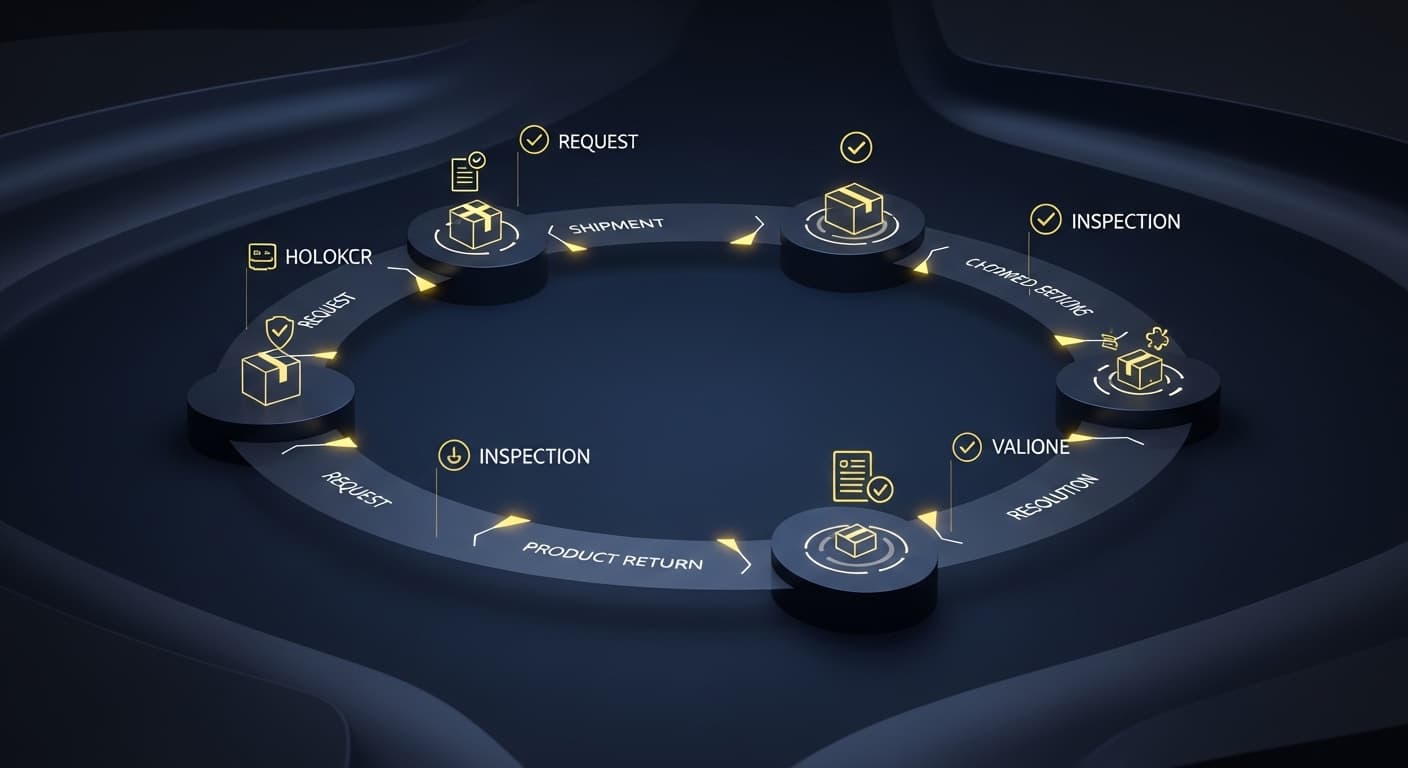
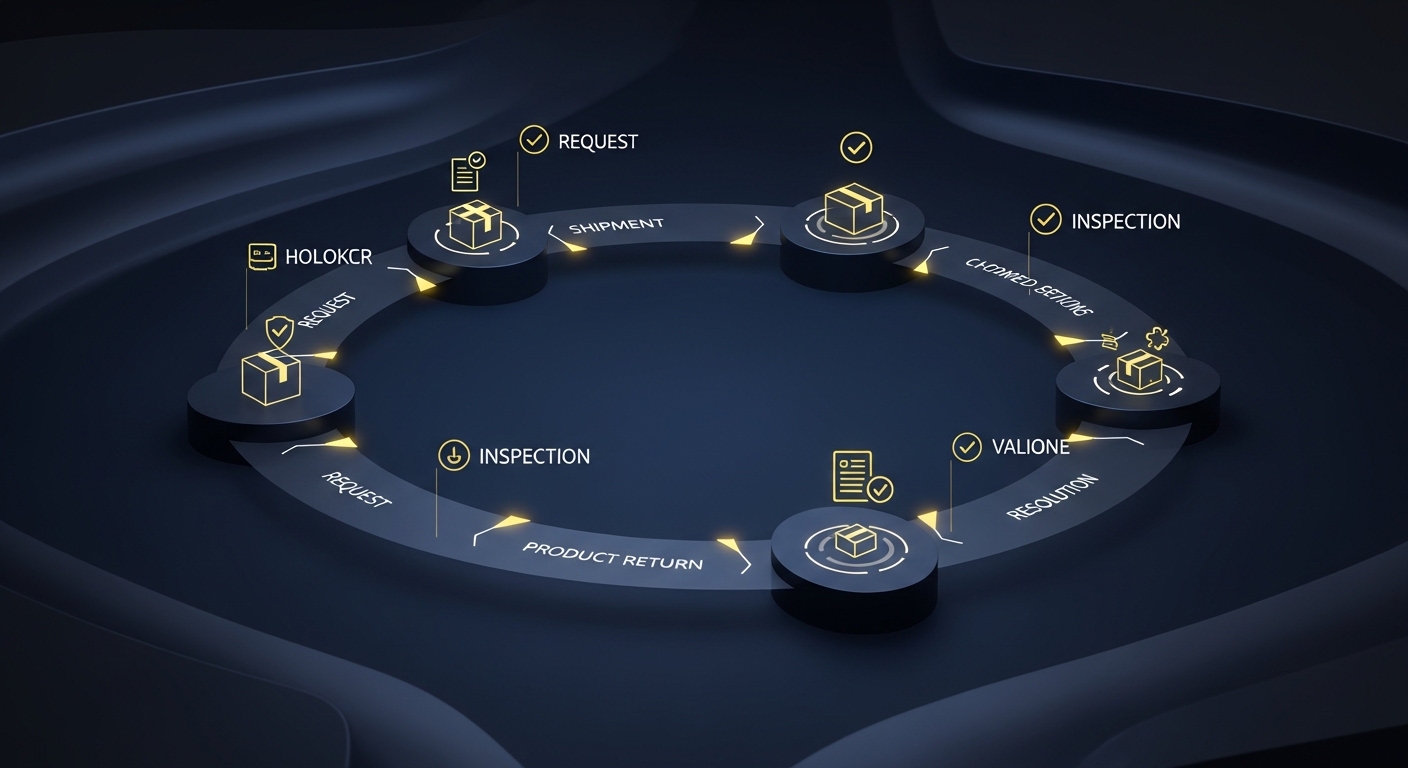
An effective RMA follows a disciplined, linear journey designed to control movement, maintain visibility, and capture valuable operational data.
Each stage builds on the previous one — forming a closed-loop system that connects customer interaction, logistics execution, and compliance validation. In cross-border tech returns, this loop also carries legal weight: the outbound leg requires an exporter of record for returns, and the inbound replacement leg requires an importer of record for replacement units at the destination.
Here’s how the process unfolds from start to finish:
The buyer submits a return request with reason codes, product details, and evidence.
The seller verifies eligibility and issues a unique RMA number.
The system provides a shipping label, return address, and policy details.
The product moves back under monitored logistics flow.
The item is verified, tested, and categorized (defect, mismatch, wear).
A decision is recorded — refund, exchange, repair, or rejection.
Every RMA concludes with a decision that defines both customer experience and cost recovery.
Choosing the right outcome isn’t just a policy choice — it’s a strategic one that determines how efficiently you balance satisfaction, logistics, and financial impact.
Below is a summary of the most common RMA outcomes and when each path delivers the best value:
Outcome | When to Use | Impact on CX / Cost |
|---|---|---|
Refund | Confirmed defect, incorrect shipment | Restores confidence; cost to margin |
Store Credit | Buyer preference change | Retains revenue and loyalty |
Exchange | Same item in stock | Improves service reliability |
Repair / Warranty | Fault under service terms | Extends product lifecycle |
Reject | Out-of-policy, unauthorized | Protects profit integrity |
No-return / Keep | Low-value or remote | Reduces freight cost, builds goodwill |
Note
A data-driven RMA policy transforms outcomes from reactive fixes into measurable customer-experience levers.
01.
RMAs create traceability — allowing teams to track product movement, validate serials, and accelerate restock cycles.
In many industries, this process links directly with ERP and WMS systems to maintain real-time inventory accuracy.
02.
Post-purchase transparency defines brand credibility. Automated updates, clear refund timelines, and consistent handling reduce dispute ratios and strengthen retention metrics.
03.
Each RMA builds a digital audit trail that supports VAT reclaim, warranty validation, and export/import documentation.
For regulated sectors like telecom, IT, and medtech, this documentation is non-negotiable for re-imports and license reporting.
Implementing RMA excellence is less about policies — and more about systems discipline
Publish clear policies visible in FAQs and invoices.
Automate authorizations based on SKU, timeframe, or defect codes.
Track structured return reasons to identify product trends.
Integrate with core systems (IMS, ERP, CRM) to eliminate manual touchpoints.
Set SLAs for approvals, refunds, and repairs.
Add verification layers (photo evidence, tamper checks) without penalizing genuine customers.
Measure outcomes — not volume: refund lag, restock time, and CX impact.
Note
Organizations that treat RMA as a data stream — not a service ticket — report up to 50% faster resolutions and up to 25% lower reverse freight cost.
Term | Purpose | Owner | When to Use |
|---|---|---|---|
RMA | Authorization workflow & traceability | Customer Support / Compliance | Before the return movement |
Reverse Logistics | Physical handling, inspection, restock | Operations / 3PL | After authorization |
RMS (Return Management System) | A software platform connecting both | IT / Operations | For process automation |
In high-value tech or telecom returns, RMAs become compliance-critical. Cross-border returns carry many of the same obligations as technology and telecom equipment imports — export-control regulations, data security obligations, and customs classification requirements all apply in both directions.
Dual-use or controlled components under ECCN classification
Temporary export for repair needing re-import documentation
Country-specific license requirements
Restricted party screening and serial verification
VAT relief and proof-of-origin for re-imports
Note
A robust RMA program mitigates customs risk and ensures full documentation integrity for every return crossing borders.
Leading platforms (e.g., ReverseLogix, Loop Returns, Happy Returns) merge automation with compliance.
Core capabilities to look for:
Workflow automation for RMA approval & labeling
relations with ERP, CRM, and warehouse systems
Dashboard tracking of SLAs and refund metrics
Analytics on return reasons and product defects
Multi-region compliance fields (VAT, customs codes, re-import data)
At IOR UAE, we don’t just manage returns — we engineer visibility, speed, and compliance into every step of your RMA process.
Our team bridges logistics, documentation, and regulatory frameworks so your high-value tech equipment moves securely across borders without delays or compliance risks.
Whether it's a single warranty swap or a multi-country reverse flow, we coordinate the entire chain — from authorization and customs paperwork to bonded testing and re-delivery — backed by global RMA coverage and compliance spanning the Middle East, Africa, and 170+ destinations worldwide.
Here’s what working with us means:
Faster RMA approvals and simplified paperwork
Full export/re-import license validation and compliance alignment
Secure bonded handling and technical testing workflows
Shorter turnaround times with complete audit-ready traceability
An RMA number is a unique authorization code assigned to each return. It links the customer’s request to internal systems, allowing teams to track movement, inspection, and resolution — ensuring every return is verified, traceable, and compliant throughout the process.
Responsibility for shipping costs depends on policy and fault. If the product is defective or incorrect, the seller usually covers return freight. For discretionary or preference-based returns, costs typically fall on the buyer as part of policy compliance.
Most RMAs are completed within 7–14 business days, depending on category and region. Automated approvals, integrated inspection workflows, and connected ERP systems can reduce turnaround to under a week for standard consumer goods and accessories.
Yes, in specific cases such as low-value goods, remote shipments, or verified quality defects. The “keep-and-refund” model minimizes reverse freight costs while maintaining customer goodwill — provided documentation or photo proof supports the claim.
RMA analytics reveal recurring product issues, supplier quality gaps, and refund cycle delays. By integrating return data with ERP or CRM systems, organizations can identify defect trends, enhance product design, and streamline reverse logistics decisions across markets.
