NEW: UAE VAT Registration for foreign businesses — sell locally in the UAE without a UAE company.
Learn MoreIf your business is preparing to enter the UAE or expand across the GCC, the logistics model you choose shapes how smoothly your goods move and how much of the operation you control.
The party logistics framework, 1PL through 5PL, is a global system, and most guides explain it in the abstract. What they leave out is how the ladder behaves inside this region, where free zones, mainland clearance, and compliance representation change the picture. This guide takes each tier in turn, shows where it fits a growth stage, and flags the point most businesses miss: where the framework stops, and specialist clearance begins.
Party logistics (PL) describes how much of your supply chain you run yourself and how much you place with outside providers. Each tier, from 1PL to 5PL, marks a step further along that scale. Lower down, you keep operations in-house. Higher up, you delegate more, and the provider takes on broader responsibility and manages daily movement.

That structure holds anywhere. What changes in the UAE and wider GCC are how each tier meets customs, free zones, and the legal side of importing, which is where this guide focuses.
First-party logistics (1PL) means your business handles its own logistics directly, using vehicles, storage, and staff you own and manage, with no external provider involved. Inside the UAE, it works for local, single-country operations. A Dubai distributor delivering to retailers across the city with its own fleet keeps full control.
The model holds only while the operation stays local. Once you import from abroad or distribute across borders into other GCC markets, 1PL hits walls. You would need your own customs capability, destination warehousing, and compliance standing in every market, which is rarely practical for a business focused on its product rather than building a logistics arm.
When 1PL applies in the UAE: local, single-country distribution with owned vehicles, with no import or cross-border GCC movement involved.
Second-party logistics (2PL) brings in a carrier to move your freight while you keep planning in-house. The carrier owns the ships, aircraft, or trucks; you decide what moves and where. For a first import into the UAE, this often means buying space on a vessel into Jebel Ali Port, or air freight into the DXB cargo terminal, while you manage the rest.
Many international businesses start here, and it is a logical first step. The limit appears quickly because a 2PL moves your goods and nothing more. It does not:
Clear your goods through UAE customs,
handle regulatory or permit requirements, or
Provide warehousing and onward distribution.
Third-party logistics (3PL) is the model most international businesses turn to when scaling into the GCC. Instead of stitching together carriers, warehouses, and distribution yourself, you hand the operation to one provider that manages warehousing, fulfillment, freight, and inland delivery on your behalf. It sits in the practical middle of the ladder: enough handoff to remove the operational load, while you keep oversight of strategy.
In the UAE, the 3PL model links directly to the free zone system. A provider operating inside the Jebel Ali Free Zone (JAFZA), Dubai Airport Free Zone (DAFZA), or Khalifa Industrial Zone Abu Dhabi (KIZAD) can:
hold your goods in bonded storage,
re-export them across the region without those goods formally entering the UAE market, and
That capability is much of why the model pays off for a business using the UAE as a regional distribution hub.
A typical 3PL contract covers the movement and storage of goods, but it does not automatically include Importer of Record representation.
The provider runs your logistics; it is not necessarily the legal entity responsible for customs for the import. A 3PL is often the right fit for mid- to large operations ready to hand off execution, as long as you separately confirm who assumes the compliance role.
Fourth-party logistics (4PL) sits a level above the 3PL. Rather than running logistics itself, a 4PL manages your entire supply chain, coordinating the providers beneath it, often several 3PLs at once, so you hold a single relationship instead of many.
This comes into its own across multiple GCC markets. A business distributing into the UAE, Saudi Arabia, Egypt, and Jordan is managing four sets of customs rules, four provider landscapes, and four regulatory regimes at once. A 4PL absorbs that complexity as a single point of accountability across vendors, geographies, and compliance requirements.
The typical fit is an enterprise brand with a genuinely regional supply chain and an internal team that wants oversight without daily execution. The value is coordination, not capacity.
Fifth-party logistics (5PL) adds a technology layer on top of everything below it. It aggregates demand and uses data and automation to optimize across several supply chains at once, rather than managing any single one.
In the GCC, this remains emerging, relevant mainly to e-commerce aggregators and very large enterprises already running regional networks. For most businesses entering the region, 5PL is not a day-one decision. The practical path runs through 3PL, then 4PL as operations grow, with 5PL mattering only at considerable scale.
Here is the part the standard PL conversation overlooks. The party logistics framework was built to describe logistics operations globally, not for a jurisdiction like the UAE, where compliance representation is a separate legal function from logistics execution.
None of the five tiers automatically carries Importer of Record or Exporter of Record responsibility. A provider can move, store, and distribute your goods at any tier without being the legal entity that customs holds accountable for the import. For regulated goods, technology, telecom, medical, and dual-use items especially, that representation must sit with a licensed party, whichever PL tier you contract.
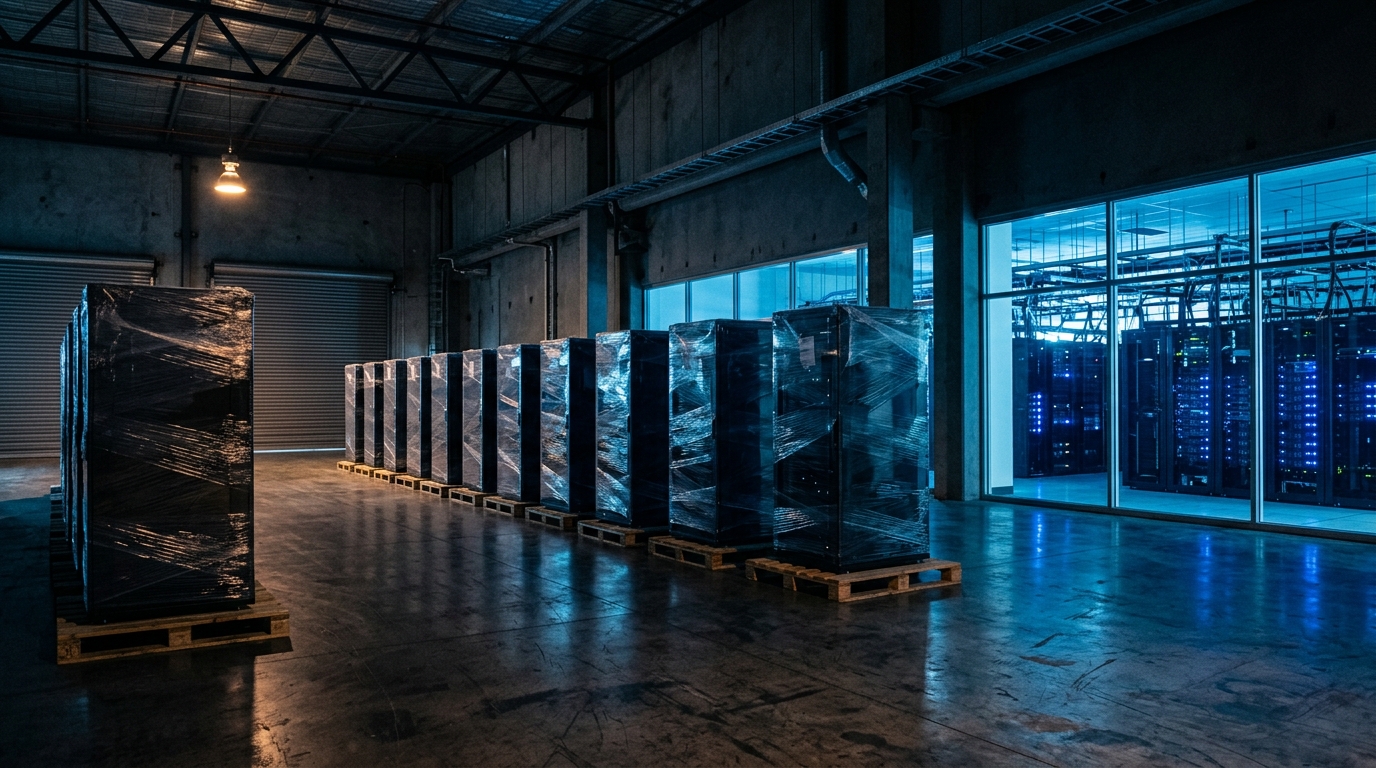
Goods held in bonded form inside a free zone are not goods cleared into the UAE mainland. Moving from one to the other is a formal import that needs the right licensing and representation, separate from whatever logistics tier handles the movement.
Customs clearance authority
Regulatory permits (TDRA for telecoms, ESMA for product standards, MOHAP for medical goods)
VAT registration
Mainland import licensing

There is no single right tier. The model that fits depends on where your business is in its regional journey. Four questions help you orient:
low, occasional volumes may suit a 2PL carrier; steady, higher volumes point to a 3PL.
A single GCC market can run on a 3PL; multi-country expansion is where a 4PL earns its place.
Technology, telecom, medical, and dual-use items raise the importance of compliance representation above the choice of tier.
With no registered local presence, the compliance question has to be answered before the logistics one.
Most businesses move up the ladder over time, adding integration and oversight as their regional footprint widens.
Your situation | Model to consider |
|---|---|
Local UAE delivery, owned fleet, no imports | 1PL |
First imports, planning kept in-house | 2PL |
Steady volume into one GCC market, operational handoff | 3PL |
Multi-country GCC expansion needs oversight | 4PL |
Large regional network, technology-led optimization | 5PL |
Regulated goods, or no local entity (at any volume) | Compliance representation alongside your chosen tier |
Tell us what you're importing and where. We'll come back with the logistics model that fits and the compliance representation it needs, including Importer of Record where required.
No. An Importer of Record is a legal and compliance role that the entity's customs holds responsible for an import, while a 3PL is an operational role that moves and stores goods. They can be provided together or held separately, and a standard 3PL contract does not automatically include the IOR function. See the difference between an Importer of Record and the consignee for more.
Yes. Some providers run operations as a 3PL while also coordinating other vendors as a 4PL. This suits a business that wants one accountable partner across a growing regional network, though it helps to confirm where execution ends and orchestration begins.
It depends on shipment complexity and whether you hold a UAE entity, but the tier matters less than compliance: technology and telecom goods carry regulatory requirements that sit outside any PL contract. This guide to importing technology and telecom equipment covers the practical details.
Free zone operations usually pair with a 3PL or 4PL that manages bonded storage and re-export. What the zone adds is a compliance layer: moving goods into the UAE mainland is a formal import needing the right licensing and representation, separate from the logistics tier.
A 3PL is the most common starting point, since it removes the operational burden while the business keeps strategic control. A 4PL tends to emerge later, once operations span multiple GCC markets and coordination across them becomes the priority.
