NEW: UAE VAT Registration for foreign businesses — sell locally in the UAE without a UAE company.
Learn MoreA shipment can be perfectly packed, insured, and tracked — yet still lose profit the moment it hits customs.
In most cases, the reason is simple: the import duty was misunderstood or miscalculated.
Import duty isn’t just a fee on trade; it’s a checkpoint of accountability — where your pricing model, HS code, and declared CIF value all converge under the scrutiny of customs. For logistics and finance teams, this is where precision replaces guesswork.
Handled correctly, duty management keeps your landed costs predictable and your compliance record clean. Handled poorly, it can trigger penalties, clearance delays, or reputational risk.
Understanding how import duty is defined, calculated, and assigned under Incoterms is, therefore, not just good practice — it’s essential trade intelligence.
Import duty is a charge applied when goods enter a country. It’s meant to regulate imports, protect local industries, and generate government revenue.
While the words duty, tariff, and tax are often used interchangeably, each affects the final landed cost differently — and together, they form the total fiscal burden on imports.
Type | What It Means | Example Scenario (for a $10,000 CIF shipment) | Why It Matters |
|---|---|---|---|
Import Duty | A customs charge applied based on the product’s HS code and origin. | 5% duty rate → $500 added to cost. | Primary border tax — influences pricing, margins, and competitiveness. |
Tariff | A type of duty imposed by trade policy, sometimes additional to standard duty. | Retaliatory tariff 10% → +$1,000 extra. | Reflects geopolitical trade rules; can shift overnight (e.g., steel, tech goods). |
Import Taxes (VAT / GST / Excise) | Consumption-based taxes applied after duties. | VAT 15% on ($10,000 + $500) = $1,575 | Directly impacts cash flow; reclaimable only in certain structures. |
Real Insight:
For this example, the $10,000 product ends up costing $13,075 landed — once all layers (duty, tariff, VAT) are applied. That’s a 30% total uplift — a powerful reason to calculate correctly before importing.
Duty is calculated primarily on the CIF value — the total of Cost + Insurance + Freight — combined with the product’s HS code, which determines its duty rate under the local customs tariff.
Formula:
Import Duty = (CIF Value × Duty Rate for HS Code)
Import Taxes (e.g., VAT) = (CIF + Duty) × Tax Rate
If your goods’ CIF is $50,000 and the applicable duty rate is 5%,
→ Duty = $2,500.
If VAT is 15%,
→ VAT = ($50,000 + $2,500) × 15% = $7,875.
Total landed cost = $60,375.
Tip
Even a 1% misclassification of HS code can overstate or understate your duty by thousands.
Every country sets a “de minimis” threshold — a minimum shipment value below which import duties and taxes do not apply.
If your shipment’s declared value is below this limit, customs clearance is faster and cheaper. If it’s above, duties and taxes must be paid based on the declared CIF value.
Typical Global Thresholds
Country / Region | De Minimis Value | Notes |
|---|---|---|
United States | USD 800 | No duties or taxes for shipments ≤ $800. |
European Union | EUR 150 (for duties) | VAT applies on all imports, regardless of value. |
Australia | AUD 1,000 | Duty-free up to $1,000; GST may still apply. |
🌍 Emerging Markets | Often $0 | All imports taxed from the first dollar. |
For e-commerce sellers: Knowing the threshold helps you plan shipping values and pricing. Sending multiple smaller parcels may avoid duty and speed delivery.
For importers: Declaring the correct shipment value prevents unexpected assessments or penalties.
For logistics planners: Structuring shipments under de minimis limits can reduce landed cost and simplify last-mile delivery.
Tip
Always check the destination’s latest de minimis rule before advertising “duty-free” or “tax-free” shipping — thresholds change frequently and differ between duty and VAT
Who pays the import duty depends on the Incoterms used in the trade agreement.
The Importer of Record is legally responsible for compliance, but the financial obligation differs by term.
01.
DDP (Delivered Duty Paid):
The seller pays all import duties and taxes before delivery.
The buyer receives the goods cleared and duty-paid — no extra charges.
02.
DAP (Delivered at Place):
The buyer pays import duties and taxes once the shipment arrives at the destination.
Common for B2B or wholesale transactions.
03.
DPU (Delivered at Place Unloaded):
Similar to DAP, but the seller unloads the goods at the destination.
Duties and taxes are still paid by the buyer.
Tip
Always mention duty responsibility clearly in invoices or online checkouts to avoid confusion or delays.
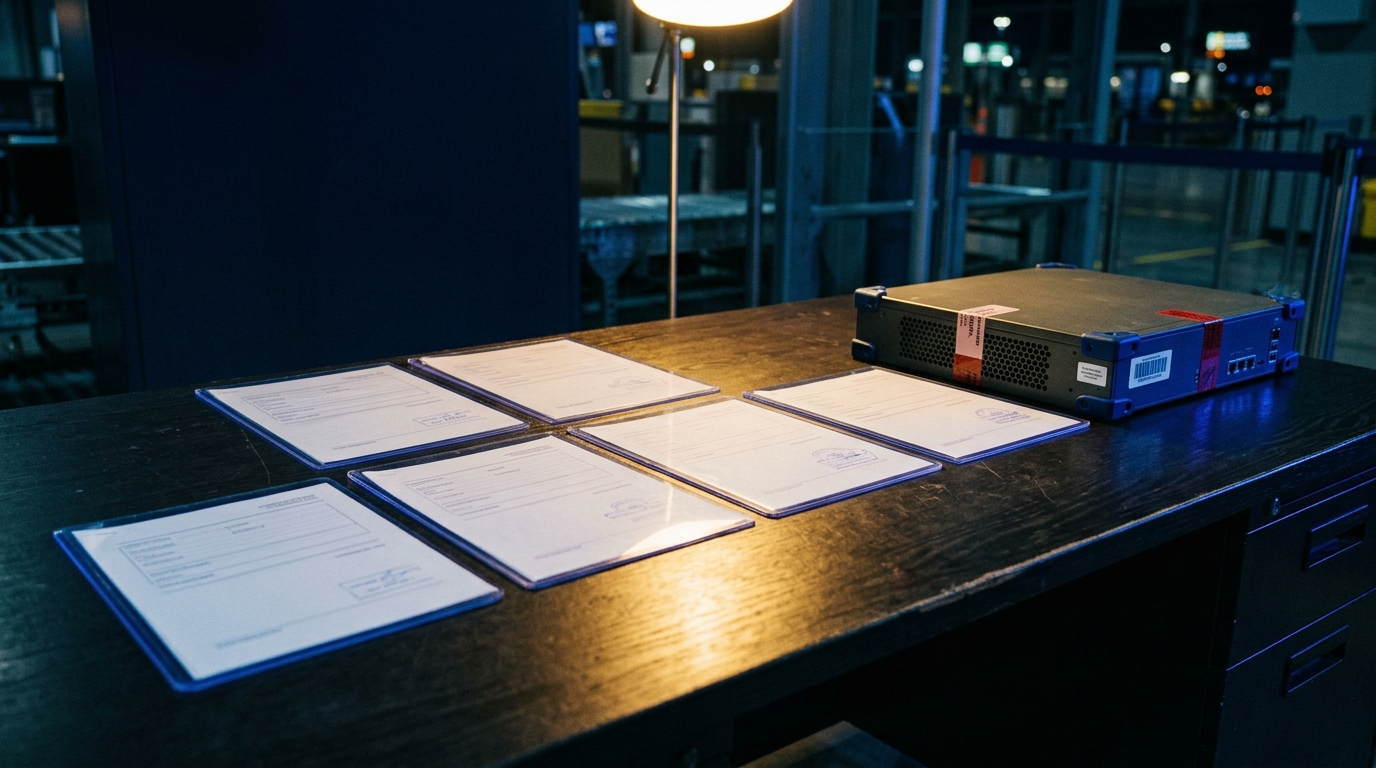
Customs clearance depends on one thing above all — accurate paperwork.
Even a small mismatch in values or missing documents can delay release or cause fines.
Commercial Invoice: Shows product value, HS code, currency, and Incoterms.
Packing List: Lists quantity, weight, and dimensions of each package.
Bill of Lading / Air Waybill: Proof of shipment used by the carrier and customs.
Certificate of Origin: Confirms where goods were made — required for FTA benefits.
Import Licenses or Permits: Needed for restricted or controlled items.
Product Certificates or Test Reports: Required for electronics, medical, or safety-regulated goods.
Insurance Certificate: Supports declared CIF value (Cost + Insurance + Freight).
Quick Tip
Always verify HS codes in official customs databases (e.g., USITC, TARIC, or local tariff portals) to prevent reclassification or overpayment
Not every import is taxed the same way. Some shipments qualify for duty relief — reducing or removing import charges entirely — when they meet specific customs criteria.
Understanding these programs helps businesses manage costs and plan smarter trade routes.
FTAs between countries can reduce or eliminate import duties on qualifying goods. To benefit, the goods must meet “rules of origin,” and the importer must provide a valid Certificate of Origin.
For example, machinery or electronics made within a trade bloc often enter duty-free, while the same product from a non-member country could face 5–10% duty.
Certain products are allowed into a country at reduced or zero duty rates until a set quota is reached.
Once the limit is filled, normal tariffs resume — a key detail for importers handling seasonal or high-volume goods.
Goods entering a country temporarily — for trade shows, exhibitions, or testing — can often avoid full import duty if they’re re-exported within a fixed period.
The ATA Carnet acts as a passport for goods, simplifying customs formalities across multiple countries.
Products sent abroad for repair, replacement, or testing can re-enter duty-free if proof of prior export is provided.
This relief is especially important for high-value tech or industrial equipment
Note
Duty exemption doesn’t always mean tax exemption. VAT or excise taxes may still apply depending on the country’s local regulations
Small errors can turn smooth imports into costly delays. Here are the most common issues to watch for:
Wrong HS Code → Verify product classification in official tariff tools.
Incomplete CIF Value → Include cost, insurance, and freight when declaring
Missing Documents → Check all permits, certificates, and invoices before shipment.
Unclear Incoterms → Define who pays duties (DDP vs DAP) in every contract.
Ignoring FTA or De Minimis Rules → Review local thresholds and trade benefits to avoid overpaying.
No IOR or Broker → Always assign a licensed representative for compliance handling.
Tip
One pre-shipment review saves time, money, and credibility at customs.
FAQs
Multiply your shipment’s CIF value by the duty rate shown for its HS code in the official tariff database
Under DDP, the seller pays duties before delivery. Under DAP, the buyer pays when goods arrive.
It’s the minimum shipment value below which duties (and sometimes taxes) don’t apply — varies by country.
Yes, if the goods meet origin rules and you provide valid proof like a Certificate of Origin.
Final Thoughts
Import duty sits at the heart of cross-border trade — where compliance meets cost control.
By mastering CIF valuation, HS codes, de minimis awareness, and Incoterms application, importers gain more than savings: they build predictability, compliance, and trust into their global operations.
Need expert help calculating duties or acting as your Importer of Record?
Talk to a Trade Compliance Expert →
