NEW: UAE VAT Registration for foreign businesses — sell locally in the UAE without a UAE company.
Learn More
The container has landed at Jebel Ali. The invoice matches the packing list, and the duty is ready to be paid. Then customs asks for one more document, and the shipment stops moving.
For regulated products in the UAE, that document is usually the ECAS certificate. It is easy to overlook because it has to be in place long before the goods ship, and by the time anyone notices it is missing, the storage clock is already running.
ECAS is the UAE’s mandatory conformity scheme for regulated products. A regulated product without a valid certificate can be held at the port or withdrawn from sale, so the certificate is required for customs clearance.
This guide covers who governs ECAS, which products need it, how to apply, what it costs, and how it fits with other UAE approvals.
ECAS, the Emirates Conformity Assessment Scheme, is the federal program through which the Ministry of Industry and Advanced Technology (MOIAT) confirms that a regulated product meets the UAE technical regulations and standards that apply to it. Without it, the product cannot legally be sold in the UAE.
ECAS and ESMA. MOIAT was established in July 2020 and took over the standardization and conformity functions of the former Emirates Authority for Standardization and Metrology (ESMA). What suppliers still call an “ESMA certificate” is today’s ECAS certificate.
ECAS and the CoC. The ECAS certificate is the Certificate of Conformity (CoC) for regulated products. A MOIAT-appointed Notified Body issues it on the ministry’s behalf.
ECAS applies only to products on MOIAT’s regulated products list. The main categories include:
Electrical and electronic products
Household appliances, audio, video and IT equipment
Lighting
LED lamps, luminaires
Solar energy products
PV modules, inverters
Toys and baby care products
Children’s toys, baby care items
Cosmetics and perfumes
Skincare, fragrances
Detergents
Household and laundry cleaners
Paints and varnishes
Emulsion and oil paints
Petroleum products
Engine oils, lubricants
Vehicle parts
Tyres
Food and beverages
Dairy products, juices
Note
Electronics often need several approvals, and any partner that handles customs clearance of regulated electronics will check each one before the goods ship.
MOIAT updates the list periodically. Equipment for explosive atmospheres falls under a separate variant, ECAS-Ex.
Requirements vary by category, but most ECAS files include three groups of documents.
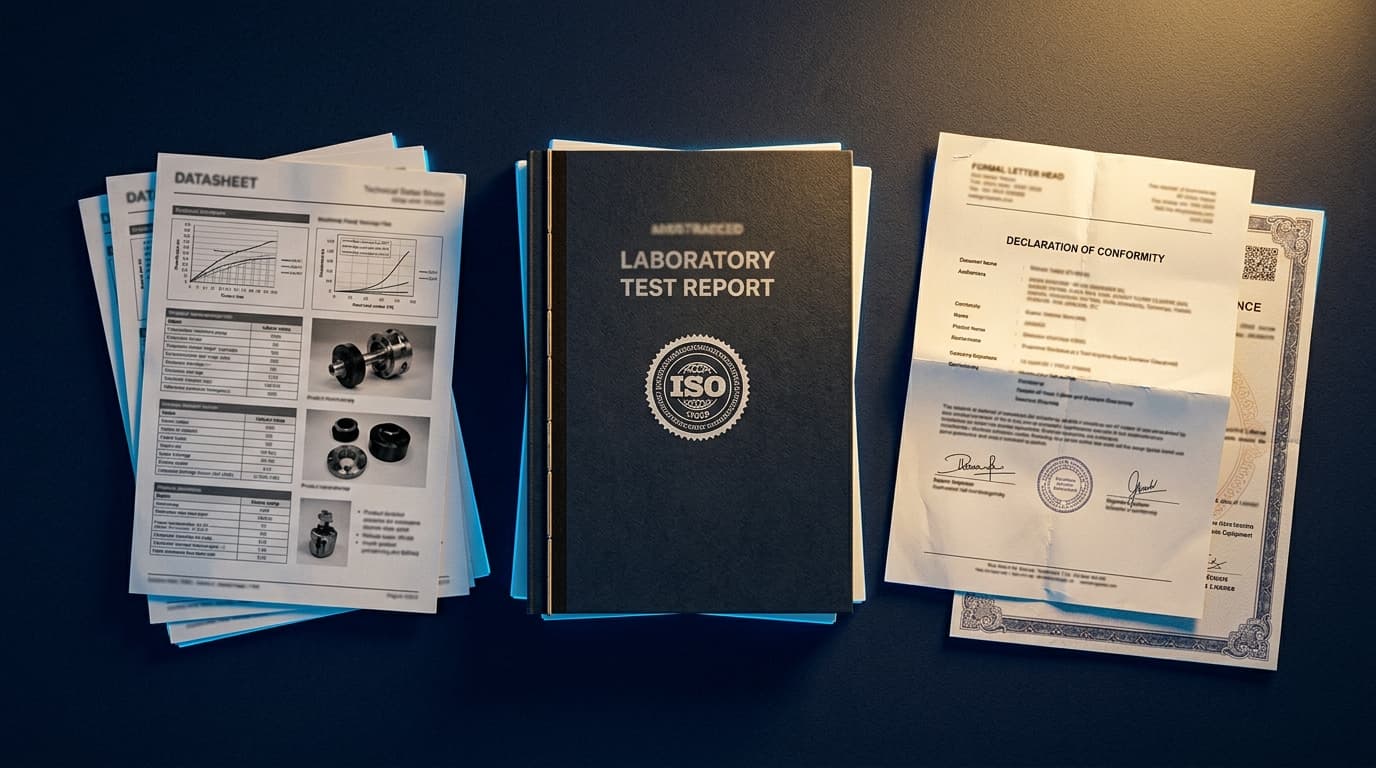
Technical datasheet matching the exact model
Product photographs and label artwork (Arabic and English for many categories)
User manual or ingredients list
Test reports from an ISO/IEC 17025-accredited laboratory, citing the applicable UAE standard.
For US-origin electronics heading to the UAE, origin-side classification often means EAR99 export classification for US-origin shipments before the goods even leave the exporter.
Declaration of conformity on the applicant’s letterhead
Valid UAE trade license held by the applicant
Authorization letter appointing the UAE local representative (foreign manufacturers)
GMP certificate (perfumes and cosmetics)
Keep product details identical across all your documents, because your commercial invoice must match the ECAS-certified product details at customs.
Check that your product is on the regulated list, and identify the technical regulation and UAE standard that apply to it.
The applicant must hold a valid UAE trade license, so foreign manufacturers appoint a UAE local representative, often their importer or distributor. If you ship through a UAE Importer of Record arrangement, agree early on which UAE party takes this role.
Gather the product data, label artwork, and declarations.
Use an ISO/IEC 17025-accredited laboratory whose reports are accepted for the applicable standard.
Submit through MOIAT’s digital services platform and choose a MOIAT-approved Notified Body to review the file.
The Certificate of Conformity is issued once compliance is confirmed. Apply the ECAS mark where required, and keep the certificate ready for customs and market checks.
Note
Testing usually decides how long the whole process takes. MOIAT lists its own processing time as one and a half working days once a complete application is submitted.
ECAS is often one of several approvals a product needs to clear UAE customs. This is especially true for technology, telecoms and medical goods.
Whether an ECAS certificate is needed depends on the product category and sometimes on the UAE free zone vs mainland import route you choose at the point of entry.
Approval | Authority | Covers |
|---|---|---|
ECAS Certificate of Conformity | MOIAT, through Notified Bodies | Mandatory for regulated products |
Emirates Quality Mark (EQM) | MOIAT | Voluntary quality mark; can be accepted in place of the ECAS CoC |
Telecommunications and Digital Government Regulatory Authority | Telecom and radio equipment; imports also need a customs permit | |
Medical device registration | Emirates Drug Establishment (EDE), formerly MOHAP | Medical devices |
The shipment is declared at an entry point such as Jebel Ali, DXB, or Khalifa Port.
Customs asks for the ECAS certificate.
If there is no certificate, UAE Customs holds the shipment until the certificate is produced.
Demurrage and storage charges build up while it waits.
If the certificate cannot be produced, the goods can be returned to origin.
The manufacturer or its UAE local representative is responsible for getting the certificate. For a foreign manufacturer importing through an IOR, IOR UAE checks two things before the shipment leaves origin:
a valid ECAS certificate is in place
the correct consignee is named
Federal customs policy sits with the Federal Authority for Identity, Citizenship, Customs and Port Security (ICP).
A missing ECAS certificate is easier to fix at origin than at the port.
Tell us what you are shipping and where it is coming from, and a UAE compliance specialist will review the certificates and approvals your product needs, from ECAS to TDRA and EDE, before your goods move.
Yes. For regulated products in the UAE, the ECAS certificate is the Certificate of Conformity. A MOIAT-appointed Notified Body issues it on the ministry’s behalf to confirm the product meets the applicable UAE technical regulations. In some markets, “CoC” refers to a certificate for a single shipment, but in the UAE it refers to the product's ECAS certificate.
ECAS-Ex is a separate version of the scheme for electrical equipment used in potentially explosive atmospheres. These are places where flammable gas, vapor, or dust may be present, such as oil, gas, and petrochemical sites. It is governed by Cabinet Resolution No. 23 of 2016 and builds on IECEx certification. ECAS-Ex certificates can be issued for one or three years.
Yes. The applicant must hold a valid UAE trade license. A foreign manufacturer therefore appoints a UAE local representative, usually its importer or distributor, through a signed authorization letter. That representative submits the application and is the manufacturer’s point of contact in the UAE. If you import through an IOR, agree early which UAE party will take on this role.
You can check a certificate through MOIAT’s digital services, or by contacting the Notified Body that issued it. Its reference appears at the end of the certificate number. When you check it, confirm that the certificate is still within its “valid until” date and that the models listed in the schedule of certification match the products you are shipping.
